Commission a Gap Analysis, Implement Actions Internally
An external gap analysis can reduce consulting costs when it provides clear priorities and the company then implements the actions itself.
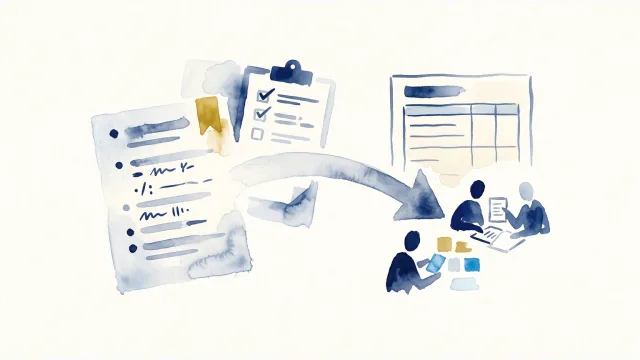
Not every company needs a large consulting project. If enough capacity, process knowledge and willingness to implement exist internally, a clear gap analysis may be sufficient: an external expert checks what is missing. The company then implements, prioritizes and tracks the actions internally.
When This Approach Works Well
This approach is especially suitable for companies that already have an operational structure and are not starting from zero. The team knows the processes, can revise documents and can make decisions internally. What is missing is an independent view of standard gaps, audit risks and the right sequence of work.
- Processes, templates or an existing management system are already in place.
- An internal person can coordinate actions.
- Top management makes decisions without long delays.
- The company does not want to commission ongoing external project management.
- Before an audit, the team needs clarity on which points are truly critical.
What a Good Gap Analysis Must Deliver
For internal implementation to work, the report must not only refer generally to clauses in the standard. It must be specific enough for internal owners to act.
| Result | Benefit for Internal Implementation |
|---|---|
| Specific findings | The team understands which document, process or record is affected. |
| Prioritization | Audit-critical points are handled first, less critical points later. |
| Recommended sequence | Dependencies become visible, for example clarifying roles before documenting processes. |
| Pragmatic implementation guidance | The action remains feasible internally and does not end in unnecessary documentation. |
Where Internal Implementation Often Fails
Even a good report does not do the work by itself. Typical weaknesses are missing ownership, action lists that are too long and a lack of decisions. It is particularly risky when every item is started at once and nothing is finished.
A simple rhythm is useful: divide actions into small packages, assign owners, set deadlines and review progress at short intervals. For an audit, the intention does not count in the end. Closed evidence does.
When External Support Still Makes Sense
Sometimes the gap analysis shows that internal implementation alone would be too risky. This is especially true when an audit date is close, no QMR role exists internally, several standards are involved, customer risk is high or many nonconformities are open. In those cases, limited external support can be more economical than a failed audit or weeks of internal loops.
The decision should be deliberate: Which tasks are realistic internally? Which tasks require experience with audit logic, interpretation of standards or interview preparation?
How Sternberg Consulting Supports You
We prepare a clear ISO gap analysis with prioritized actions that your team can continue working on internally. If you need selective support afterwards, we agree individual work packages. For cost orientation, the article on ISO 9001 costs is also useful.
Frequently Asked Questions
Can a gap analysis replace a complete consulting project?
Yes, if enough capacity and implementation capability are available internally. It does not automatically replace internal audits, management review or the actual completion of actions.
How detailed should the action plan be?
It should be specific enough for internal owners to know what must be changed, why it matters and what priority the point has. A simple reference to a clause is usually not enough.
What is cheaper: gap analysis or ongoing consulting?
A gap analysis is usually cheaper if the company implements afterwards by itself. Ongoing consulting is more useful when time, experience or decision structures are missing internally.